Why I Stopped Chasing the Lowest Price on Derrick Components (And What It Cost Me)
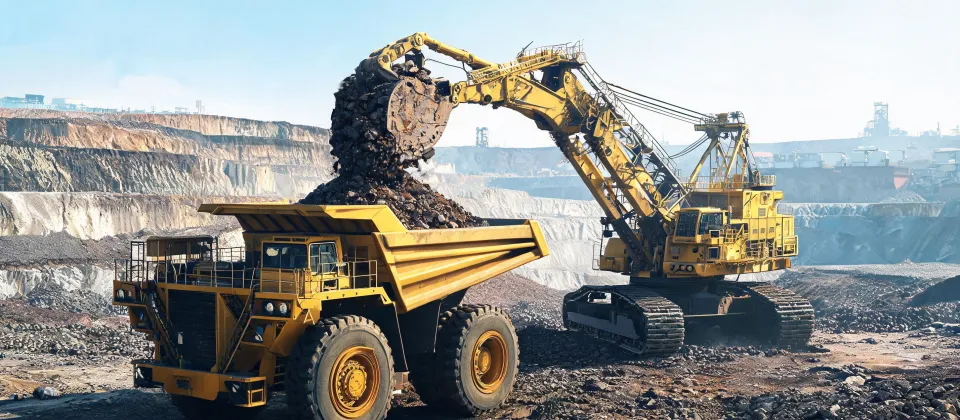
If you've ever been in charge of ordering critical parts for heavy machinery—pump seals for a mud system, let's say, or a new set of sheaves for a hoist—you know that sinking feeling when something shows up and it just looks wrong. I'm Mindy. I handle purchasing for a mid-sized equipment maintenance yard in West Texas. We service drilling rigs, mostly, and a few big mine haulers. For the last four years, my job has been to keep the shop supplied with everything from air filters to major drivetrain components. I report to ops and finance, so I hear it from both sides if something goes sideways.
This story is about a specific purchase that changed how I think about my job. It’s not about the biggest order I ever placed—that was a $48,000 set of drill pipes. It’s about a $4,200 order that taught me more about brand perception and reliability than any textbook ever could. And honestly? It was a pretty humbling lesson.
The Setup: A New Vendor, A Great Price
It was late Q2 2023. We needed a run of specialized conveyor belt rollers for a client's overland system. Our usual supplier, a well-known national outfit, quoted us $78 per roller. Lead time was 6 weeks. That’s about standard for that component. Then, a new vendor I’d found online—let's call them Western Industrial Components—quoted $52 per roller. Same spec sheet, they said. Lead time? Only 4 weeks. I ran the numbers. On an order of 80 rollers, that was a saving of over $2,000. That got my attention.
Everything I'd read about supply chain management said to diversify your vendor base and always get three quotes. The conventional wisdom is that price competition is healthy. My boss, the operations manager, is always pushing me to find cost efficiencies. So, I felt pretty good about this one. I placed the order on June 12th, 2023.
“Look at this,” I told our shop foreman, Tom. “$52 a pop. We just saved the company two grand on a single order.”
Tom, who’s been in the oil patch since the 80s, just grunted. “Hope they work,” he said. “Cheap parts are cheap for a reason.”
I brushed him off. I had the spec sheet. I had the quote. What could go wrong?
The Turning Point: When 'Good Enough' Isn't
The rollers showed up in early July, right on time. The packaging was fine. But the moment we opened the first crate, Tom cocked his head. “Feel this,” he said, handing me a roller. The steel felt… slick. Different. And the bearing housing—it had a rough casting seam that our usual supplier's parts didn't have. It wasn't a functional defect, he said, but it wasn't pretty.
“It’s just a casting mark,” I said. “It’s the inside of a conveyor roller. Nobody’s going to see it.”
Tom shrugged and installed them. They worked fine for about two weeks. Then one seized. Then another. The customer, a mid-sized E&P company, noticed. They called our boss. “Your new belts are shedding steel flakes into the product stream,” they said. “This is a contamination issue.”
The seized bearings had worn down and created metal shavings. The rough casting seam, it turned out, wasn't just a cosmetic flaw. It was a stress riser. Under load, in a hot West Texas summer, the housing had micro-fractured. It wasn't a material defect, technically—it was a quality defect. A lack of attention to finish.
The most frustrating part? The $2,000 I saved turned into a $4,000 emergency re-order of the original, more expensive parts, plus $1,200 in overtime for our crew to swap them out over a weekend. And that’s just the hard cost. The soft cost? My boss had to explain to the client's procurement manager why we'd sourced substandard components. That conversation cost us a bit of trust.
The Aftermath: Rebuilding Trust with the Client
After the third late delivery (wait, no—that’s a different story), after the urgency of the replacement order, I finally sat down with Tom to debrief. “You knew those would be trouble,” I said. It wasn't a question.
“I suspected,” he said. “The feel of the metal.”
I should add that Tom is a master mechanic with 30 years of experience. He can feel a bad bearing by spinning it in his hand. He has a sense for material quality that I, as an office administrator, simply don’t have. I tried to substitute a spreadsheet advantage—a cheaper price—for his tactile knowledge. It was a mistake.
Here’s the thing: the western industrial company’s spec sheet matched. They met the dimensional tolerances. But they failed the perception test. When the client's maintenance team saw those rollers with the rough castings, they formed an immediate opinion about the quality of our whole operation. They saw a budget part and assumed we were cutting corners.
What I Learned: Quality Is Brand Image
I didn't fully understand the value of perceived quality until that $4,200 order went completely wrong. It's tempting to think you can just compare unit prices and spec sheets. But identical specs from different vendors can result in wildly different outcomes—and wildly different perceptions.
Most buyers focus on the purchase price and completely miss the downstream cost of a perceived quality failure. The question everyone asks is “what’s your best price?” The question they should ask is “what’s the total cost of ownership, including the risk of a quality failure?” Our emergency re-order cost 150% of the original savings. That’s a bad trade.
In our industry—energy and mining—reliability and durability are everything. Equipment downtime costs thousands of dollars an hour. A $50 difference per component is a rounding error compared to a single day of lost production. When I switched back to the premium, more expensive supplier, our client feedback on parts quality improved noticeably. Not measurably, maybe, but noticeably. The shop floor guys stopped complaining. The client’s procurement team stopped calling with questions. That’s worth something.
According to standard quality management principles—like those in ISO 9001—perception of quality is a legitimate performance indicator. It’s not just about the thing working; it’s about the stakeholders’ confidence that it will work. We lost that confidence on a $2,000 savings. I’m not 100% sure it would have happened with a different spec, but the rough casting seam was the first domino.
So what do I do now? I still get multiple quotes. I still look for cost savings. But I have a new rule: if the vendor can’t match the feel of quality—if the finish is rough, if the packaging is sloppy, if the support documentation is vague—I walk. I let Tom touch a sample part before I place a large order. It sounds low-tech, but in our world, a bad look is often a sign of a bad component. You’d think after 5 years of managing these relationships I’d have known that. Sometimes you have to get burned to learn it.
— Mindy, Office Administrator
West Texas equipment maintenance yard, circa 2024