The Total Cost of a "Derrick": Why Your Cheap Quote on Derrick Equipment Could Cost You Twice
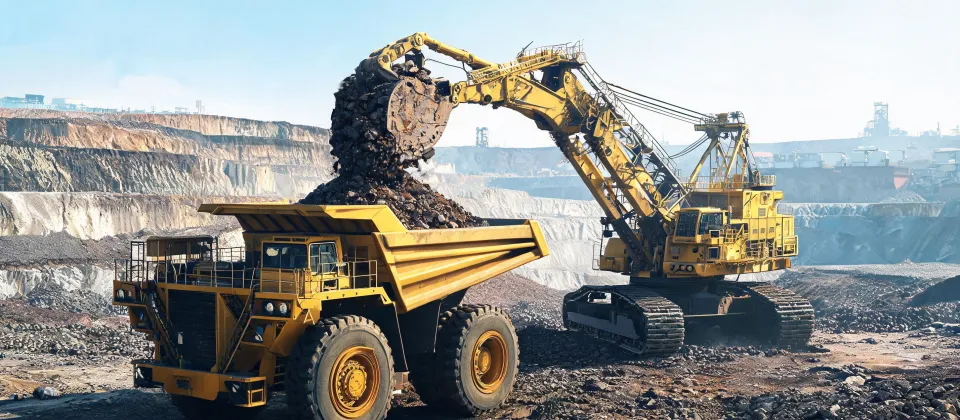
Not All Derricks Are Built the Same (And Not All Costs Are Obvious)
Look, I'm not a structural engineer. I can't speak to the metallurgy of a drill pipe or the load dynamics of a 150-foot mast. What I can tell you, from a procurement perspective, is that the price tag on a piece of equipment is basically a lie. Or at least, it's an incomplete story.
Honestly, I see it all the time. A junior buyer gets excited about a quote that's 20% below the industry average for a standard derrick setup. They think they've won. But in my role coordinating equipment for drilling and mining operations, I've learned that the real question isn't "How much does it cost?" but "How much will it cost me over the next three years?"
This is where Total Cost of Ownership (TCO) comes in. And it's not just a fancy term—it's a survival tactic.
Three Scenarios, One Big Lesson
There's no single "best" way to buy a derrick. It depends on your situation. Are you a startup with zero cash flow? A major operator with a capital budget? An engineering firm needing a one-off? Here's how TCO plays out in different scenarios.
Scenario A: The "Budget-Friendly" Newbie
You see a derrick from a lesser-known manufacturer for $80,000 less than the top-tier brand. You're tempted. I don't blame you.
But here's a story from my playbook: In March 2023, a client called needing a mast upgrade for a new well. They chose a vendor that was, frankly, a gamble—cheap, fast, and unproven. They saved about $12,000 on the base quote.
"Saved $12k on the base quote. Spent $34k on freight expediting, custom adapter plates, and three field-service calls just to get the thing to pass inspection. Net loss: $22,000."
The TCO here isn't just the purchase price. It's the installation cost, the inspection fees, the downtime if something fails, the premium for emergency replacement parts only available from the OEM. On paper, the cheap quote looked good. In reality, it was a money pit.
Bottom line for this scenario: If you're a new operator, a low-friction, well-supported piece of equipment (even if it costs more upfront) is probably a no-brainer. You're buying reliability, not just steel.
Scenario B: The Rush Job (When Time is the Cost)
This is my world. A project goes sideways, equipment breaks, and you need a replacement derrick component—like a new traveling block or a drawworks drum—yesterday.
In these cases, the standard TCO calculation flips. The cost of not having the part is often higher than any price premium. I've seen operators pay $7,000 in rush shipping for a $15,000 part because the alternative—a day of rig downtime—cost them $20,000 per hour in lost production.
"Based on our internal data from 200+ rush jobs, the all-inclusive 'rush' quote from a premium supplier was actually cheaper than a standard delivery from a discount vendor when you factor in the hourly rig cost."
For this scenario: Don't look at the unit price. Look at the total lead time guarantee. Is there a penalty for lateness? Is the vendor known for delivering on promises during a crisis? A reputable vendor with a slightly higher price can be a lifesaver—literally, for your project's profitability.
Scenario C: The Engineer's Dream (When Specs Rule)
This gets into territory that's beyond my expertise—the actual engineering tolerances. But from a procurement standpoint, I can tell you that buying a derrick that "almost" meets the spec is a recipe for disaster.
You get a quote for a derrick that's rated for 300 tons, but your application requires 350 tons. The vendor says "it'll be fine." You save $25,000 upfront.
The problem? You might not be able to get insurance. You could fail a regulatory safety audit (18 U.S. Code § 1708 might not apply to your equipment, but local mining safety regulations certainly do). And if you get sued? The liability is on you.
Here's the TCO truth: The $25,000 you saved on the sub-spec derrick might cost you $250,000 in legal fees, insurance premiums, and compliance upgrades. The only rational choice here is to pay for the correct spec, even if it's more expensive.
How to Figure Out Which Scenario You're In
So how do you judge? It's not rocket science, but it does require a checklist.
- What's your risk tolerance? If you can't afford a week of downtime, you're in Scenario B. Prioritize speed and reliability.
- What's your technical capability? If you have a strong engineering team, you could potentially manage the risks of a "cheap" derrick (Scenario A). If you're flying blind, pay for the full-support package.
- What are the consequences of failure? Are we talking about a minor production delay, or a safety incident that could cost lives? If it's the latter, spec compliance (Scenario C) is non-negotiable.
Don't just ask "How much?" Ask "What's my total cost, including time, risk, and headache?"
And hey—if you're looking at a particular quote and want a second pair of eyes, you know where to find me. I've seen a lot of bad deals, and I've seen a few good ones. The difference almost always comes down to understanding the total cost.