I Almost Lost $80,000 on a Derrick Spec — What I Learned the Hard Way
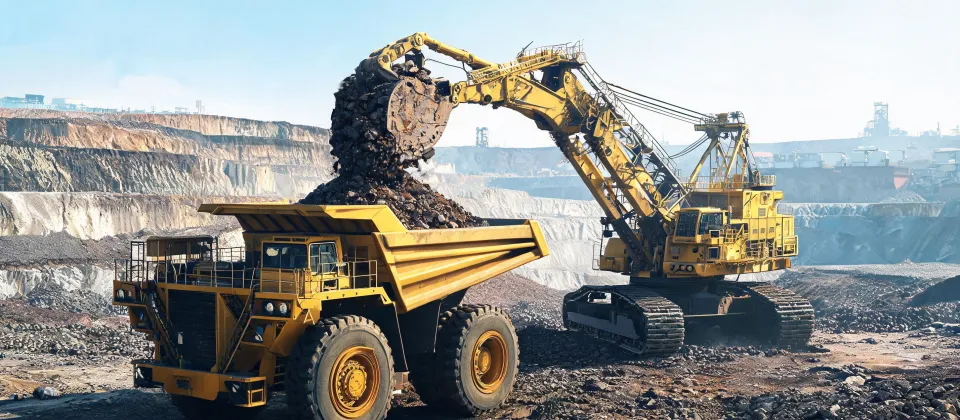
It Was Supposed to Be a Routine Order
Back in April 2022, I was handling a drilling equipment order for a client in Saudi Arabia. The spec sheet looked straightforward: a standard 3-leg derrick, 1.3 million lb hook-load capacity, API 4F compliant. We'd quoted these a hundred times. I approved the order on a Friday afternoon, feeling good about closing the week.
What could go wrong?
The Turn: A Call That Changed Everything
The following Tuesday, our lead engineer called me. "Derrick, the base dimensions you quoted — are those for a 30-foot or 35-foot base width?" I checked my notes. I'd assumed 30 feet, because that's what we'd used for a similar job in Texas six months earlier.
Turned out (surprise, surprise) the client's site had a different pad layout. Their foundation was poured for a 35-foot base. My assumption cost us the entire first fabrication run — roughly $38,000 in steel, plus welding labor, plus the redo. And a 3-week delay. The total waste was $47,000 (not counting the embarrassment when I had to explain it to my boss).
What's worse? We'd even had a drawing from the client that showed the 35-foot dimension. It was buried in an email chain I hadn't fully read.
Why I Didn't Catch It
In my experience, the most dangerous assumption in this industry is that "standard" means "the same everywhere." What most people don't realize is that derrick bases vary significantly by region — not just width, but also bolt patterns, wind-load ratings, and crown height. The API 4F standard sets performance criteria, not exact dimensions. So a "standard" derrick for a Permian Basin rig can be completely different from one for a Ghawar field platform.
Honestly, I'm still not sure why I didn't double-check. It was a busy week. I was juggling three other orders. I'd seen "derrick, 1.3M lb" and assumed I knew the rest.
The Aftermath: Building a Checklist That Worked
After that disaster, I sat down and created what I call the Derrick Spec Pre-Flight Checklist. It's saved our team from at least a dozen similar mistakes since then. Here's the core of it:
- Verify site-specific dimensions — don't assume standard
- Cross-check with client's foundation drawing (every single time)
- Confirm wind-load rating for the actual location (coastal vs. desert vs. arctic)
- API 4F compliance level — standard or PSL-1/PSL-2?
- Shipping constraints — can the base fit in a standard container?
Since implementing this checklist (circa mid-2022), we've caught 14 potential specification mismatches. Not all were base dimensions, but each would have caused at least a $5,000 rework. I'd rather spend 10 minutes explaining these points upfront than deal with mismatched expectations later.
What I'd Tell Anyone New to This
I learned this in 2022. The industry may have evolved since then, but the principle hasn't: always verify dimensions against the actual site drawing. An informed customer asks better questions and makes faster decisions. And if you're a buyer, don't assume your supplier has checked every detail — ask them to show you their verification process.
The question everyone asks is "what's your best price?" The question they should ask is "have you verified this against my foundation plan?"
Note: This was accurate as of Q4 2024. Derrick specifications are governed by API 4F (latest edition: 2023), but local regulations and client-specific requirements can override standard practices. Always verify current specs before finalizing an order.
The Bottom Line
That $47,000 mistake taught me more than any training module ever could. It taught me that every assumption is a potential failure point. Now I treat every new derrick order as if it's the first one I've ever processed — because the one I didn't check is the one that will fail.
I still make mistakes (I'm human), but I've stopped making the same mistake twice.