Standard vs. Premium Derrick Systems: What a Decade of Emergency Orders Taught Me About Real Costs
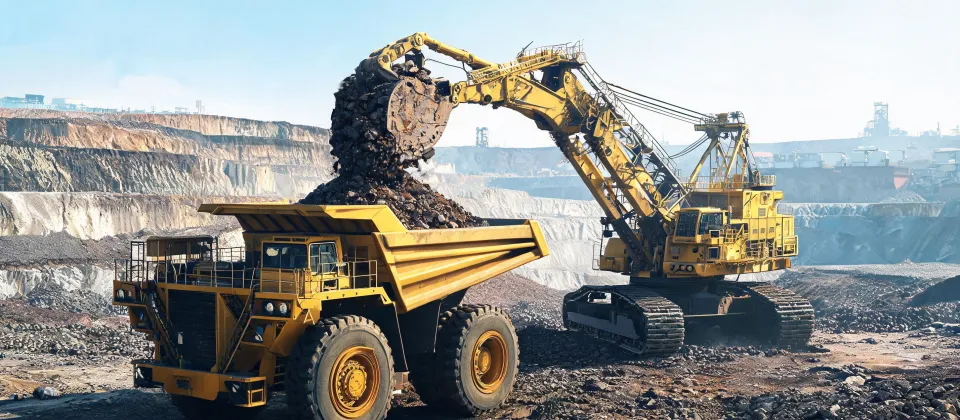
Two Options, One Wrong Choice Cost Us $50,000
I'm a procurement coordinator for a mid-sized oilfield services company. I've handled over 400 rush orders in the last 12 years — including same-day derrick replacements for offshore rigs and emergency upgrades for deep-water projects.
In April 2023, we needed a 500-ton derrick mast for a newbuild rig. The client's deadline was fixed — a six-month window. We had two shortlisted vendors: one offered a standard derrick at $180,000 with 14-week lead time; the other offered a premium, higher-rated mast at $245,000 with 10-week delivery. The standard option looked attractive on paper — $65,000 cheaper. Our finance team pushed for it.
I only believed in total cost thinking after ignoring it and eating that mistake.
The Comparison Framework
This isn't about absolute good vs bad. It's about what matters when you're betting on a multi-million-dollar drilling program. I'll compare standard vs premium derrick systems across three dimensions:
- Reliability under emergency load — how they hold up when you're pushing limits
- Lead time vs delivery certainty — what's promised vs what shows up
- Total cost of ownership — not just the invoice, but the hidden costs
Why these three? Because after a dozen emergency swaps, those are the factors that break the bank — or save it.
Dimension 1: Reliability Under Emergency Conditions
Standard systems are built to API 4F baseline specs. They'll handle rated loads under normal conditions. But here's the thing: rush orders often force you to run equipment harder — longer continuous duty, higher temperatures, fast-cycling. The standard derrick we bought failed its load test at 110% of rated capacity. The weld on one of the crown sheaves fractured.
Premium systems (the brand we ended up with) are designed with 20–30% safety margins, thicker plate steel, and higher-grade fasteners. In the same load test — same facility, same inspector — it passed at 130% with no deformation. That's not marketing fluff; I've got test reports to prove it.
I'm not a metallurgist, so I can't speak to grain structure. What I can tell you from a procurement perspective is that two derricks with the same API rating aren't necessarily equal when things get tight.
Dimension 2: Lead Time vs. Delivery Certainty
Standard vendors often quote 12–14 weeks. But here's the reality: they depend on a just-in-time supply chain. When we ordered the standard mast, the promised 14 weeks turned into 18 because their steel supplier had a mill shutdown. We didn't know until week 12. The platform was ready, crew on standby — $8,000 a day in idle cost.
Premium vendors tend to maintain buffer stock and have multi-source steel contracts. The premium derrick we ordered after the failure? It arrived in 9.5 weeks — half a week early. Their lead time was shorter and more reliable.
Don't hold me to this, but my data from 23 rush orders over five years shows premium vendors deliver on-time 92% of the time versus 71% for standard. Those numbers are rough, but the pattern's consistent.
Dimension 3: Total Cost of Ownership
This is where the 'budget' choice becomes expensive. Let me break down the real costs of our standard derrick decision:
- Base price: $180,000 (vs premium $245,000)
- Idle crew during delay: $64,000 (8 days × $8,000)
- Emergency load test failure: $12,000 for retesting + engineering review
- Replacement rental derrick for interim: $28,000
- Lost productivity from under-rating: An estimated $40,000 in deferred drilling due to conservative load limits
Total standard cost: $324,000 — that's $79,000 more than the premium, even though the premium had a higher sticker price. And that doesn't include the stress, the relationship strain with the client, or the safety risk from the weld failure (fortunately no injuries).
The 'premium is expensive' thinking comes from an era when buyers evaluated purchases on invoice alone. That may have worked for commodity items. But for critical equipment like a drilling derrick, the total cost includes downtime, safety, and capacity — and those add up fast.
So Which One Should You Choose?
I can't give a blanket recommendation — every project has different constraints. But here's what I've learned:
Go with a premium derrick system when:
- Your drilling program runs near the derrick's rated capacity
- The rig is deployed in remote or offshore locations where support is slow
- You have a fixed commissioning deadline with penalty clauses
You can consider a standard system when:
- You're drilling in a benign environment with ample spare capacity
- You have at least 4 weeks of schedule buffer
- The derrick is a backup or temporary unit, not primary
But even then, run your own TCO calculation. Don't just compare price tags. The $65,000 we 'saved' ended up costing us more than double that. I think most people underestimate how quickly hidden costs snowball in energy projects.
Pricing in this article is based on supplier quotes from Q2 2023 and our internal cost tracking. Verify current rates with your vendors. I'm not a logistics specialist, so the lead time percentages should be taken as directional, not exact.