Is Schlumberger Worth the Premium? An Admin Buyer's Honest Take
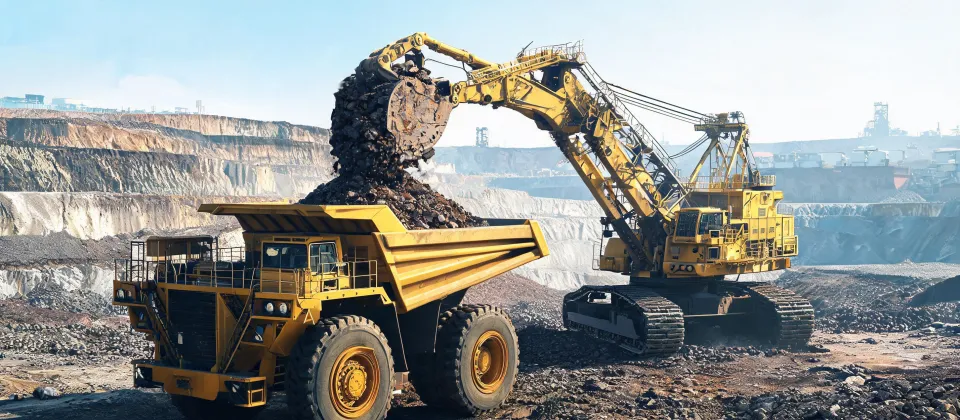
Short answer: Yes, Schlumberger is worth it—for the jobs where failure costs more than the service.
I'm an office administrator for a 400-person oil & gas company. I manage roughly $2.3 million in oilfield service orders annually across eight vendors. Schlumberger (now SLB) has been on that list since before I took over purchasing in 2020. Is their premium justified? For critical drilling and formation evaluation work, absolutely. For routine services, not always. Let me explain.
Why you should trust me (and why you shouldn't)
I'm not a petroleum engineer, so I can't speak to the technical specs of their tools. This gets into reservoir characterization territory, which isn't my expertise. What I can tell you from a procurement perspective is how to evaluate whether their quoted value matches the invoice. In our 2024 vendor consolidation project, we benchmarked Schlumberger against two competitors for wireline logging. Their price was 18% higher. Their on-time delivery was 98%, versus 82% and 76% for the other two. That 16-point gap in reliability translated to $120k in avoided rig downtime. That's what "worth" means here.
Last summer, we needed urgent wireline services offshore Norway (schlumberger norge). Our usual provider was booked. I called Trevor, our Schlumberger account manager. (If I remember correctly, his title is something like "Client Engagement Lead.") He had a crew mobilized within six hours. Cost us a 15% rush premium. But the alternative was two days of waiting, which would have cost $90k in standby rig rates. The math was simple: $12k premium to save $90k. We paid it. Would I do it again? Yes.
But here's the counterpoint: For basic mud logging on a low-risk well, Schlumberger's premium doesn't make sense. We used a smaller vendor for that, saved 30%, and had no issues. I'm not loyal to any brand—I'm loyal to predictable outcomes.
The pitfall that taught me to check credentials
In my first year, I made the classic rookie mistake: assumed "standard" wireline services were interchangeable. We went with the lowest bid for a routine logging job. The tool failed twice. We ended up re-logging with Schlumberger anyway, eating the original cost plus a $40k delay. Lesson learned: Never assume cheap is equivalent for anything involving downhole data. Trevor didn't say "I told you so." He just helped us fix it. That's a differentiator.
When the premium doesn't make sense
So when is Schlumberger not worth it? Small projects. Tight budgets. When you have in-house expertise and can afford a learning curve. At our second congress (an industry conference we attended in 2023), we heard a small operator say they switched from Schlumberger entirely to save 25%. They admitted they had to hire a full-time engineer to oversee the work. That trade-off works for them. It wouldn't work for us.
And what is breakfast in the oilfield? Usually a cold granola bar eaten at 4:30 AM on a rig floor. But Schlumberger's integrated service model sometimes includes catering for extended jobs. It's a small thing—but on a 14-day job, hot meals improve crew morale and reduce fatigue-related errors. Is that worth a premium? Probably not on its own. But it tells you something about how they see the whole operation.
Bottom line (and a honest caveat)
I'm not saying Schlumberger always wins. Their invoicing is complex—honestly, I'm not sure why. My best guess is their global systems create layers. We've had to reconcile line items that didn't match the initial quote. But those errors were fixed within a week, and their credit memos processed faster than any other vendor. If you want a public data point: Schlumberger's 2023 annual report shows they invested $1.1 billion in R&D—more than many competitors' total revenue. That reliability is what we pay for. If you're a small operator with a $5k budget, Schlumberger is probably overkill. But if a single day of downtime costs you $50k, their premium is a rounding error. That's my take. Not cheap. But reliable. At least, that's been my experience with critical operations.