Ignore the Derrick Rose Face Meme: A Buyer's Guide to Derrick Oil Equipment
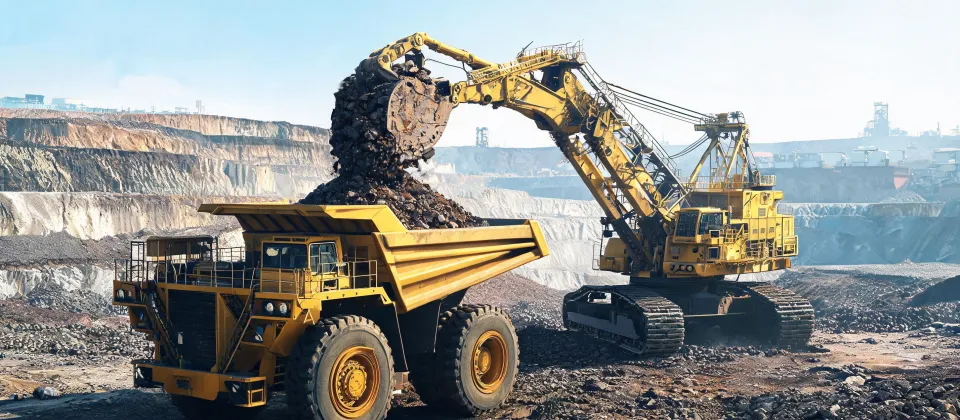
Google 'derrick' and you'll get a mess. A Derrick Rose face meme. A box score with Derrick White stats vs Knicks. Ads for Simparica for dogs. And if you've ever searched for Ford pickup parts, you'll get those too. The actual derrick oil equipment—the steel tower that holds the drill string—is buried somewhere on page three.
I've been there. For the past six years, I've worked as a procurement manager at a mid-size oilfield services company. I've watched our derrick budget grow from $180,000 to over $1.2 million a year. I've logged every order in our cost tracking system, audited every invoice, and made more mistakes than I'll admit on a first date. So let me say this: there is no single 'best' derrick. It depends on your situation.
Derrick Oil Equipment: Three Buying Scenarios
I've broken down the buyers I work with into three buckets. Honestly, this isn't a rigorous segmentation—it's based on the purchase orders I've processed since 2019. But it's useful:
- Small / independent operators—drilling fewer than four wells a year.
- Mid-size producers—running a continuous program with more than six rigs.
- Contractors / rental players—where demand swings more than 30% year over year.
If you're not sure which one you're in, I'll give you a self-test at the end. For now, look at the scenarios below. One of them probably feels familiar.
Scenario A: Small Operator, Shallow Wells
If you're a small operator with shallow wells and an annual derrick budget under $500k, buying brand-new is rarely the right move. The smart play is usually a used mast with a third-party inspection. Here's a real example from our records: in 2022, a small operator we worked with bought a used 131-foot derrick for $210,000. A new equivalent was $375,000. With inspection, minor welding repairs, and new hoist cable, the total landed at $255,000. That's a $120,000 saving—and the equipment passed a full load test.
But don't scope-creep. I've seen a $60,000 inspection program balloon into a $400,000 rebuild because no one verified the structural drawings before purchasing. I assumed 'reconditioned' meant the manufacturer had replaced every worn part. Didn't verify. Turned out the crown block sheaves were worn, and we had to spend an extra $18,000 two months after delivery. Never assume the seller's term 'reconditioned' has a standard meaning.
One more thing: don't let a supplier make you feel bad for a small order. When I was starting out, the vendors who treated my $200 orders seriously are the ones I still use for $20,000 orders. Small doesn't mean unimportant—it means potential. A good derrick supplier will answer your questions whether you're buying a complete rig or just a spare part.
Scenario B: Mid-Size Producer, Continuous Program
Now you're in my world. If you're running six or more rigs, you have the leverage to negotiate on total cost of ownership, not sticker price. In Q2 2024, I compared four manufacturers for a 150-ton derrick package. A Texas-based manufacturer quoted $640,000 including freight and startup. An out-of-state broker quoted $580,000—then added freight, assembly, training, and a 'project management' fee. When I totaled the line items, it came to $712,000. That's a 12% difference hidden in fine print. The Texas manufacturer wasn't cheap. They were transparent.
Transparency. That's the real product.
Never expected the premium option to have the best process, but they did. They sent a dedicated QA person to walk through the load test with our engineer. That process caught a misalignment before it became a failure. The so-called budget broker would have shipped the unit without a documented test. Per FTC advertising guidelines (ftc.gov), claims like 'heavy-duty' or 'certified' need to be substantiated. If a vendor hesitates when you ask for the test report, that's a red flag.
Also, don't assume 'API-compliant' means identical steel specs across vendors. It doesn't. Ask for the actual load test report, the steel grade, and the coating spec. If they can't send it in 24 hours, move on.
Part of me wants to consolidate all our orders with one vendor for simplicity. Another part remembers the 2023 supply chain crunch, when our backup vendor kept us online while the primary couldn't deliver. I basically run a primary + backup system now. The redundancy costs a little extra, but it saved us at least $300,000 in downtime last year.
Scenario C: Contractor or Rental Player
If your drilling calendar has peaks and valleys, renting may beat buying. I know—that sounds backwards. But in 2023, we rented a modular derrick for a 90-day pad job. The rental cost was $150,000. Buying the same unit would have been $420,000 plus mobilization. The maintenance, insurance, and storage for the other 275 days would have added roughly $60,000. Rental saved us about $210,000 on that one project.
However, rental contracts are where suppliers earn their margin back. Watch for:
- Mobilization and demobilization fees that aren't in the daily rate.
- Daily rate minimums—some vendors charge you for 30 days even if you need 20.
- 'Inspection' or 'wear and tear' charges assessed after return.
- Crane assist requirements (note to self: confirm crane access before signing).
Context dependent: this worked for us because we're a mid-size producer with predictable drilling schedules. If you're a one-project contractor with no ownership base, the rental math might be different. In that case, a used purchase could still make sense if you intend to resell after the job. Crunch the numbers with your own utilization assumptions.
How to Tell Which Scenario You're In
Still not sure? Answer these three questions:
- How many wells do you plan to drill in the next 12 months? Fewer than 4 means Scenario A. More than 6 means Scenario B. If it changes dramatically from year to year, you're Scenario C.
- Do you have a dedicated maintenance crew? No = Scenario A. Yes = Scenario B. 'We have to borrow one' = Scenario C.
- Can you carry an idle asset for nine months? No = Scenario A. Yes = Scenario B. Not comfortably = Scenario C.
If you answered 'no' to most questions, start with Scenario A. If you answered 'yes' to most, Scenario B. If your answers are all over the place, Scenario C is the best place to start.
Procurement Checklist From a Cost Controller
Let's close with the checklist I actually use for every derrick or rig component purchase. I wish I'd had this when I started:
- Get three quotes minimum. Our procurement policy now requires this because of one hidden-fee vendor who left us with a $1,200 redo when their 'cheap' option failed quality.
- Ask for a TCO breakdown in writing. Include purchase price, freight, installation, training, first-year maintenance, and estimated resale value. If a line item is missing, ask why.
- Verify vendor claims. Per FTC guidelines (ftc.gov), advertising claims need to be truthful and substantiated. A real derrick vendor will provide test reports, not just a brochure.
- Plan for a 5% contingency. Every project I've tracked over $150,000 has had at least one surprise. Not because vendors are crooks, but because field conditions change.
I don't have hard data on industry-wide defect rates, but based on six years of orders and roughly 80 purchase orders, my sense is that 15-20% of low-cost units need some kind of spec correction after arrival. That doesn't mean low-cost is bad. It means you need to plan for verification.
Bottom line: the right derrick isn't the one with the lowest sticker price. It's the one that matches your drilling pattern, your cash flow, and your support capacity. Take it from someone who has tracked every invoice for six years: a good derrick isn't a splurge, it's an investment. But you don't need the most expensive one. You need the one that will actually make money for your operation.
So before you click on another Derrick Rose face meme, ask yourself: what kind of derrick are you actually looking for? If it's oil and gas equipment, use the scenarios above. If you're here for Derrick White stats vs Knicks, I can't help you. But if your search is about derrick oil equipment, now you have a plan.