Derrick vs. Derrick: Why Your Equipment Spec Isn't Just a Name on a Page
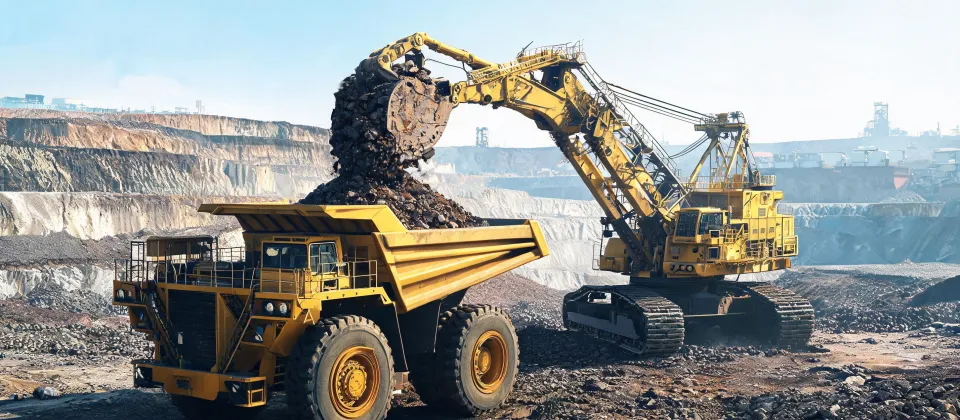
Two Things with the Same Name
I review specifications for a living. Roughly 200+ unique items annually. When our Q1 2024 quality audit turned up a problem, it wasn't with a complex component. It was with a name.
The spec called for a "Derrick"—the brand. The purchase order listed "derrick"—the generic equipment. The supplier, a guy named Derrick Ward, sent us a structure he'd fabricated. Not ideal, but workable? Worse than expected.
Here's the thing: In industrial procurement, the difference between a proper noun and a common noun can cost you. A lot. Let's compare the two paths: Verification vs. Assumption.
Dimension 1: The Spec (The 'What')
Verification Path: You specify "Derrick" as the brand. The contract includes a model number, a load rating, and a material certificate. The unit is tested to a specific standard. You have a paper trail.
Assumption Path: You write "derrick" on the PO. The supplier, whose name happens to be Derrick, provides a structure. It looks like a derrick. It might even work like one. But it hasn't been validated against the spec. The cost difference? The certified unit was $18,000. The "Derrick" unit was $12,000. The rework after the failed load test? $12,000. Exactly what we didn't need.
Conclusion: Specification isn't a suggestion. It's a contract. When you leave it open to interpretation, you're betting on someone else's judgment. In my experience, that's a bad bet.
Dimension 2: The Source (The 'Who')
Verification Path: You source from an approved vendor. You know their quality system. You've audited their facility. You have a history of their performance. They are a known entity.
Assumption Path: You find a supplier who says they can do the job. Maybe their website looks professional. Maybe their sales rep is convincing. You skip the audit to save time. I still kick myself for skipping a vendor site visit once. If I'd gone, I'd have seen their "precision machining" was a guy named Evans with a 20-year-old lathe. The parts were out of spec by 0.5mm. Not terrible, but on a $40,000 order, it meant 8,000 units were scrap.
Conclusion: The source is the system. You can't inspect quality into a product. You have to build it in. Who builds it matters more than the price on the quote.
Dimension 3: The Verification Protocol (The 'How')
Verification Path: You implement a checklist. Our standard protocol is: (1) Confirm spec, (2) Check material certificate, (3) Visual inspection, (4) Dimensional check, (5) Load test if applicable. The checklist—created after my third mistake—has saved us an estimated $8,000 in potential rework.
Assumption Path: You trust the supplier's word. "It's within industry standard," they say. How do you know? When I asked that supplier about their tolerance, they said "0.01 inches." Normal tolerance for that component is 0.005 inches. They were off by 100%. That quality issue cost us a $22,000 redo and delayed our launch by 3 weeks.
Conclusion: Trust, but verify—with a method. A checklist is the cheapest insurance you can buy. It's not about distrust; it's about clarity. It's about preventing the 5-minute problem that becomes a 5-day crisis.
Why This Matters: A Personal Regret
One of my biggest regrets: not enforcing the verification protocol on a rushed project. The client—let's call it a "Chrisley" situation, you never know if the story is real or fabricated—needed equipment fast. We skipped the load test. The structure failed on site. The cost of the replacement, the crane rental, and the lost production time? Over $50,000. 5 minutes of verification would have caught the weld defect.
There's something satisfying about a perfectly executed verification. After all the stress, seeing a unit pass its final test—that's the payoff. The best part? No 3am worry sessions about whether the order will arrive.
Final Decision: A Setting-Based Guide
So, when do you choose the Verification Path? When the cost of failure exceeds the cost of checking. Simple as that.
- Choose Verification when: Your project has a critical deadline, high liability, or complex requirements. If the answer to "What happens if it fails?" is "Very bad things," you verify.
- Choose Assumption when: The item is low-risk, easily replaceable, or has a clear history of working. For commodity items from known suppliers, a lighter touch is fine.
The key is knowing which is which. Don't treat a derrick from Derrick the same as a certified unit from a proper manufacturer. The name might be the same. The quality isn't.
Between you and me, I'd rather spend an hour on a checklist than a month on rework. The math is simple.