Derrick Oil and Gas: The 4 Questions That Would Have Saved Us $42,000
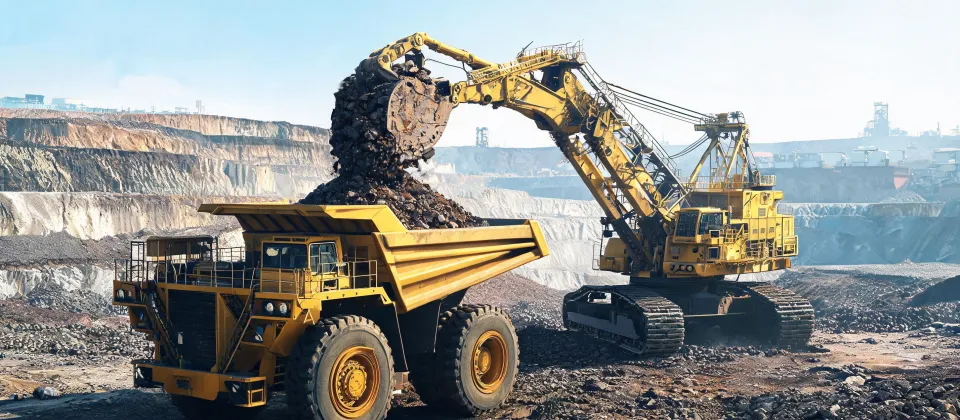
Google derrick white payton pritchard and you get basketball highlights. Google derrick oil and gas and you eventually get mast designs and load charts. Same word, completely different worlds. And in my experience, that confusion is a perfect metaphor for how people order drilling equipment—we focus on the name and miss the context.
I'm a procurement coordinator in Houston, and I've been handling derrick equipment orders for six years. I've made nine significant mistakes that I've documented for our team—roughly $210,000 in wasted budget between rework, delays, and reputation damage. Not an easy number to type out. But the reason I'm sharing it is that the last eighteen months have been clean. We built a checklist out of those scars, and it's caught 47 potential errors so far.
The surface problem: we kept picking the wrong supplier
Every time one of our derrick orders went sideways, my instinct was to blame the supplier. The welds looked like a five-year-old did them. The pin holes didn't line up with the substructure. The coating peeled before installation. It seemed like a classic vendor quality problem. So we'd drop the vendor, find a new one, and tell ourselves the problem was solved.
Then the same issues showed up at the next site, just dressed a little differently.
The deeper problem: we were measuring the wrong numbers
The real issue wasn't the fabricators. It was the specifications we gave them.
Here's the thing: most derrick suppliers are not trying to cut corners. They're trying to meet the drawings and standards you send. If those only mention "rated load capacity" and "height to crown," that's often exactly what they'll design to—ignoring the nuances that separate a derrick that works for three years from one that works for twenty.
What I mean is that a "250-ton derrick" from three different suppliers can mean three completely different structures. One assumes a 2.0 safety factor with a specific wind profile. Another assumes ideal weather and a perfectly balanced load. A third includes the crown block but not the travel block. The headline number is the same, but the actual steel—overall weight, joint design, base dimensions—could be completely different. API 4F gives us the baseline, but it doesn't design the structure for you. The interpretation is where things go sideways.
We were measuring the wrong things, and we were measuring them too late.
A metallurgist named Van Orden at one of our approved shops said something that still sticks with me:
"Everyone asks about yield strength. Nobody asks for the heat numbers. That's where the truth lives."
I thought he was being dramatic. He wasn't.
It's the same reason NBA discussions about Derrick White and Payton Pritchard often focus on points per game. The stat is real, but it misses the defense, the off-ball movement, the decisions that win a playoff series. If you only watch the highlight reel, you think you know the player. If you only read the load chart, you think you know the structure. Both are incomplete.
The cost of missing the details
In the spring of 2022—when supply chains were still chaos—we approved a $97,000 order for six skid-mounted masts from a fabricator with a solid reputation and a price 14% below the incumbent.
I went back and forth between the two bidders for two weeks. The incumbent had a proven track record. The low bidder had a better story and a faster timeline. Ultimately I chose the low bidder because our project was already over budget. That's the worst reason to choose equipment: we made the decision to save money, not to solve a problem.
The load chart looked fine. The paint spec matched what we used on our other derricks. The delivery date was even a few days ahead of schedule (which, honestly, should have been a red flag). We signed the PO and moved on.
Three weeks later, on location in Odessa, we uncrated the first mast and tried to bolt it to the substructure. The bolt holes didn't line up. Not by a little. Off by 1.5 inches.
The manufacturer said the holes were within "industry tolerance." But industry tolerance doesn't matter when your existing structure expects a different pattern. The mast didn't fit.
We called an outside crew to drill and ream all six masts. That was $7,600 in labor and $2,300 in lost overtime. The two-week schedule delay triggered downstream contractor damages of $18,000. Add the engineering review time and freight charges, and the final number crossed $42,000. On a single order. For a 1.5-inch mismatch.
The worst part didn't show up in the ledger. Our client saw the photo of the misaligned mast sitting on the ground before we could fix it. They didn't care which spec was wrong. They just saw a company that couldn't manage a simple bolt pattern. That impression is still with them.
Looking back, I should have asked four questions before signing that PO. At the time, the spec sheet seemed complete. But I was measuring the obvious things and ignoring the ones that actually matter.
The fix: a four-question checklist
Now, before any derrick order, we send a short checklist. It's not a full audit. It's four questions that force the supplier to prove they read the drawings and understood the conditions:
- Can you send the mill test report for each heat of steel used in the main structure? Not one generic certificate for the whole project. Each heat number, with the actual measured yield and carbon equivalent.
- What are the weld procedure qualifications? Send the WPS and PQR for the processes and positions you'll actually use. "We'll weld it to spec" is not an answer.
- What pin-hole alignment tolerance do you guarantee? Give me a number. If the answer is "industry standard," it's not standardized enough for us.
- Did you calculate the load chart from our layout? Show me the calculation file. I want to see the actual configuration—not a generic template from your engineering department.
That's it. Four questions. They don't cost anything, but they've caught 47 potential errors in the last eighteen months. Some of those were small. Some would have been another time bomb.
When we first started sending these questions, a sales VP at one vendor called and said we were being "too detailed" for the market. That told me everything I needed to know. The suppliers who welcome the checklist are the ones whose work I can trust. The ones who push back are the ones who sell a number rather than support a structure.
Quality in derrick equipment isn't just a procurement issue—it's a brand issue. A misaligned mast on a rig site is like a smudged letterhead or a drift in a brand color: people notice, and they remember. They may not know the technical detail, but they know the project looked broken.
So, if you're here for how to get wise in blooket, I can't help you with that. If you're comparing a Bentley GT's 0-to-60 time to a derrick's rated capacity, same warning: the headline number is rarely the story. But if you're ordering derrick oil and gas equipment, listen to the Van Ordens of the world. The truth is in the heat numbers, the tolerance numbers, and the load files. And sometimes, it's in a 1.5-inch gap that teaches you what quality actually means.