Derrick Isn't a Person: Why Specs Matter More Than Search Results
I have a straightforward opinion: the word derrick has a context problem, and it is costing people real money. In my day job, I review drilling structures before they ship. I am the quality and compliance manager at a drilling equipment supplier. I look at roughly 200—or rather, 180 to 220 depending on the year—derricks and masts. In 2024, I rejected 4% of first deliveries because the certified material test reports didn't match the drawings.
So when I say derrick and you think football player, I get it. But that confusion is exactly where expensive mistakes start.
The Derrick Problem
If you Googled derrick this morning, you might have found a biography. If you searched how big is Derrick Henry, you found a running back who is—I want to say 6-foot-3 and 247 pounds, but don't quote me on that. He is not the derrick I inspect.
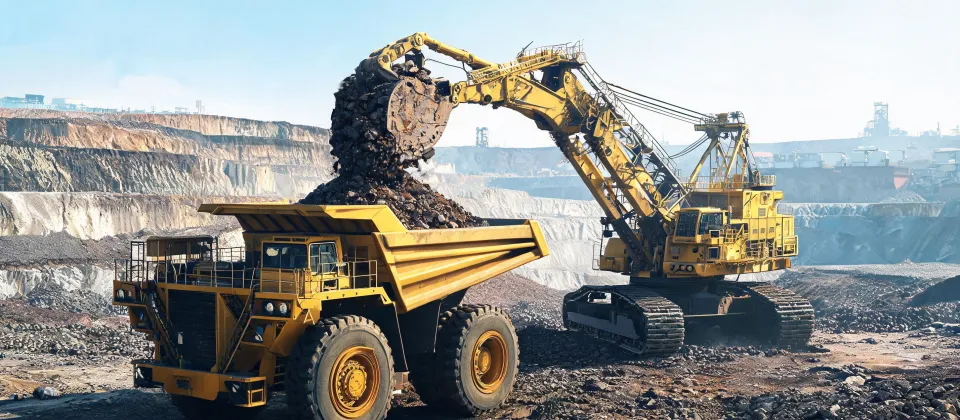
In oilfield and mining language, a derrick is a tall, load-bearing structure. It supports the drill string, the crown block, and the hoisting equipment. On a rig, it is the tower. In a mine, it is the structure that keeps the sheaves in place. It is not a person, a lake, or a half-remembered character named Dutch van der.
That last one seems ridiculous, but I have seen how names work in procurement. Someone sends an email that says need a quote for a derrick with no drawing, no load rating, and no API standard. If a supplier does not ask follow-up questions, that is a red flag. Because derrick alone is not a specification.
What Is Actually in a Derrick Spec
According to the American Petroleum Institute's API Spec 4F (as of 2025, the industry reference for drilling and well-servicing structures), derricks and masts have to be designed for rated capacity, including wind load, hoist load, and a safety factor. The current edition changes over time, so verify the requirements at api.org. But the point is: there is a standard. And standards are not a vibe.
The same way you don't order a big one, you don't order a derrick. You order a derrick with a rated hook load, a wind velocity, a structural class, and a drawing number.
That is the hard-won part. In Q3 2024, a contractor approved a 300,000-lb mast based on a conversation. The purchase order said mast complete, per standard. But the standard was not included. The vendor quoted a 250,000-lb version, and the first delivery failed load testing. The redo cost $22,000 and three weeks of schedule. I am not inventing that number; I signed the rejection report.
Prevention Is Cheaper Than Cure, and It's Not Close
That $22,000 mistake changed how I think about vendor verification. I did not fully believe in checklists until I had to explain to a project manager why a mast with no rated capacity was sitting in the yard waiting to be returned.
I have mixed feelings about paperwork. Part of me wants to trust vendors. Another part remembers that the cheap quote ended up 30% more expensive after corrections. I eventually built a 12-point checklist for every structure order. It's not exciting. It's just cheap insurance.
Five minutes of verification beats five weeks of correction. That sounds like a slogan, but it is also a bill of materials. The cost of a missed spec is an order of magnitude larger than the cost of checking it.
Here is the short version of my checklist:
- Drawing or dimension sheet
- Rated load capacity
- API standard and edition
- Wind load or site conditions
- Inspection and test requirements
What Lake Derrick, Dutch van der, and a Hawk Have in Common
Here is the part that might sound like a joke, but it is not. Every month, search queries land on our site that have nothing to do with drilling equipment. Lake Derrick real story is one. Dutch van der is another. Steven is another. And what's the difference between a hawk and a is maybe my favorite because I cannot finish that sentence for them.
I don't know the Lake Derrick real story. I don't know if it is a lake, a fishing spot, or something someone made up. What I know is that a name is not a specification. There might be a lake named Derrick, there are people named Derrick, and there is a steel structure called a derrick. If you mix them up in a purchase order, you are going to get a confused vendor—or worse, a vendor who sends you something because you did not ask questions.
The same applies to Dutch van der and Steven. If you are looking for a video game character, you have come to the wrong place. And if you are a Steven, please send drawings with your request. Names do not carry load ratings.
And for the unfinished hawk question: I can't tell you the difference between a hawk and a handsaw, but I can tell you the difference between a derrick and a mast. A mast is a portable derrick. A derrick can be a fixed tower. Different use cases, different load paths, different inspection points. The difference matters when the wind changes.
But No One Is That Confused, Right?
You might be thinking that no competent procurement person confuses a football player with a drilling rig. I would like to agree. But in 2024, I rejected a batch because the weld inspection logs were missing. The vendor's response was:
It's within industry standard.
I asked which standard. They couldn't name one. That is not a quality program; that is a hope.
The real problem is not the search results. It is the assumption that the right term will somehow be obvious. That is why I keep coming back to verification. You don't fix a naming problem by being clever. You fix it by requiring a spec on every line item.
So here is my answer: derrick is not a person, a lake, a Dutch character, or a hawk. It is a load-bearing structure. If you need one, don't search for it. Specify it. And if your supplier does not ask whether you mean the player, the lake, or the rig, that is exactly when you should start asking about their inspection process.