Derrick Buying Guide: 3 Scenarios and the Real Cost of Choosing Cheap
The right derrick depends on the job
There's no single 'best derrick.' There's only the right trade-off for your operation. I'm the cost-control person at a 40-person drilling services company. I've managed our equipment budget for the past six years, and I've watched the lowest quote turn into the highest total cost more times than I'd like to admit.
If you're comparing derrick options right now, you're probably in one of three situations. Each one points to a different buy.
Scenario 1: Occasional use and light duty
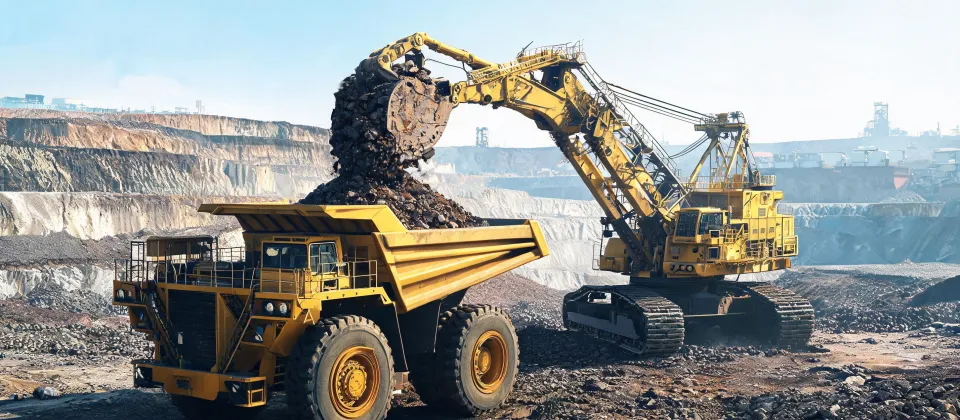
This is the only scenario where 'less derrick' can be the right call. If your structure gets used for a few weeks at a time and then sits, you don't need the most rugged specification on the market. Buying a top-of-the-line unit for low utilization is like using a mining truck to move a ton of gravel twice a year.
Here's the counterintuitive part: most equipment advice says buy the most capable unit you can afford. For low utilization, that's wrong. A simpler derrick that meets your required capacity and inspection standards can free up budget for something that actually produces revenue.
Where people get burned
They get burned when 'occasional' becomes 'I need it now.' If you buy a used derrick with thin paperwork, you're not being efficient—you're accepting hidden risk. Set aside money for a third-party inspection before you put it to work. And think about resale while you're negotiating. A derrick with clean documentation and a recognizable standard behind it will be easier to sell later.
Scenario 2: Continuous operation with tight schedules
If your crews run the derrick nearly every day, the calculation changes. Now the cost of downtime matters more than the purchase price. A one-day failure can eat a 5 percent difference in quotes instantly.
In a 2023 replacement, one supplier came in $27,000 lower than another. The numbers said go with the lower quote. My gut said something was off—the load test certificate was two years old and the maintenance log looked thin. We went with the other supplier, paid for an independent inspection, and found stress cracks that the paperwork claimed had been checked. I still kick myself for the times I didn't dig that deep earlier.
Should mention: the higher quote also included a field service visit. We didn't realize that was missing from the cheaper quote until we compared line-by-line. That alone was worth a few thousand dollars.
In continuous use, compare the whole cost structure, not just the base price. Ask about load testing, commissioning, spare parts, and how long a replacement part takes to arrive. As of January 2025, that means asking each vendor to map their price to the requirements of API Spec 4F or, if your derrick will be used in construction, OSHA's Cranes and Derricks rule (29 CFR Part 1926, Subpart CC). If the vendor can't do it, that's an answer in itself.
Scenario 3: Harsh environment or remote site
This is where 'value over price' stops being a concept and becomes a survival skill. From the outside, two derricks with the same hook load rating look almost identical. The reality is material grades, welding procedures, coatings, and inspection history. Those are the differences that decide whether your structure is still safe after two winters.
Here's something vendors won't tell you: the first quote often excludes the things that keep a structure alive in a hard environment. Third-party load testing, corrosion protection, and spare parts can appear in the footer as 'options.' They're not options. They're the difference between a tool and a liability.
People assume the lowest quote means the vendor is more efficient. What they don't see is which costs are being deferred. On a remote site, deferred costs have a nasty habit of arriving all at once, with a weather window attached.
I want to say the inspection on our last arctic-range purchase added about three weeks to the schedule, but don't quote me on that—it might have been longer because of the holiday shutdown. I do not care about the delay as much as I care about not having to explain a structural failure miles from the nearest crane.
How to tell which scenario you're in
If you're not sure, answer three questions.
- How many days per month will the derrick actually be working?
- If the derrick stops, does the project stop? What does that cost per day?
- How long would it take for a service technician or replacement part to reach the site?
Low utilization? You're in Scenario 1. No room for downtime? Scenario 2. Remote and unforgiving? Scenario 3. Don't convince yourself you're in Scenario 1 when you know you're in Scenario 2. I've watched that self-deception show up in the cost tracking system as a line item called 'unplanned repairs.'
Bottom line: buy on total cost, not sticker price
What I do not want to see is another procurement with a lower number on a bid form and the same structural assumptions underneath. The most expensive derrick I've been involved with was one we bought for the wrong scenario, because the replacement, the inspection, and the downtime ended up costing more than the original budget.
Whichever scenario you're in, compare standards before you compare prices. API Spec 4F is the benchmark for drilling and well-servicing structures. OSHA's Cranes and Derricks in Construction rule (29 CFR 1926, Subpart CC) applies when derricks are used in construction activities. Those documents tell you what the structure was actually built to do. If a quote doesn't reference them, ask why.
Buying a derrick is not about finding the cheapest one. It's about finding the one that will cost the least over the life of the project. That's the side of the spreadsheet I'm always on.